


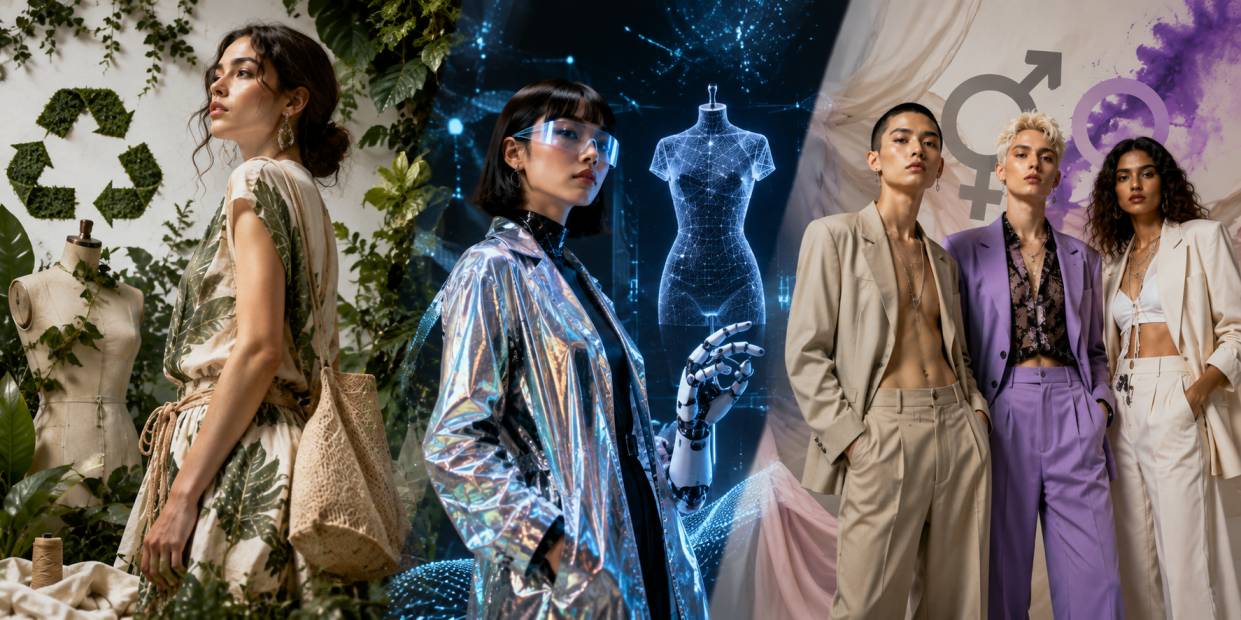
Fashion is not the same as it was five years ago. And it won’t look the same in five years either. Three major movements are driving this change: sustainable design, AI, and gender-fluid styling. If you're serious about a career in fashion, these are trends you don't want to miss from the sidelines. In fact, these are the skills you will need.
And this is exactly what our B.Des (Hons) in Fashion Design at Future University is all about. And here's why these three shifts are more important today than they've ever been.
Sustainable Fashion Isn't a Choice Anymore
Fashion has long suffered from a reputation for waste. Fast fashion was cheap clothes, fast turnover, and a lot of landfill. This is changing.
Brands now have a real responsibility to use better materials, to reduce waste and to think about a garment’s whole life, not just how it looks on day one. Recycled fabrics, natural dyes, upcycled pieces, made-to-last construction. These aren’t niche ideas anymore. That's normal.
For students, that means learning to design with a larger question in mind: what happens to this piece after someone’s done wearing it? That’s a whole different way of thinking than fashion school used to teach, and it’s one that employers are actively looking for.
AI isn't taking designers' jobs - it's changing how they do those jobs
“AI in fashion” has a lot of people thinking about robots replacing designers. That’s not what’s really happening.
AI appears as a tool, not a takeover. Designers are using it to test patterns faster, forecast which colours or styles might be trending next and cut down on the guesswork that used to take weeks of a design cycle. Some brands are using AI to help them plan cuts more accurately, so less fabric is wasted. Others use it to customise designs for specific customers at a scale that was previously impossible.
The designers that are doing really well are not the ones that are ignoring AI right now. They have learned to work with it, to use it to move faster but still have their own creative instinct in charge.
Gender-fluid styling is changing the whole industry.
Fashion has never been just about clothes - it's always been about identity. This idea is taking off right now.
More brands are moving away from the rigid “menswear” and “womenswear” sections and are designing collections that are intended to be worn by any and all. Shapes, fabrics and colours are being liberated from old rules about who is 'supposed' to wear what. This is not only a runway statement. It's making its way into everyday retail, and consumers are responding to it.
This gives young designers a lot of creative space. You’re no longer designing for a fixed idea of man or woman. You’re designing for a person, and that person could be anyone.
Here's why these three shifts matter more today than they ever did before
These three shifts - sustainability, AI and gender-fluid design - are not three separate trends, happening in three isolated corners of the industry. They overlap and redefine what it means to be a fashion designer in today’s world.
That’s exactly the sort of training that the B.Des (Hons) in Fashion Design at Future University is all about. Students are exposed to sustainable materials and construction hands-on; they learn how digital tools and AI fit into a modern design process, and they are encouraged to design without boxing themselves in with old categories.
If you want a career in fashion, the industry won’t wait for you to catch up. Now is the perfect time to begin learning this design process.
FAQS
1. What is sustainable fashion?
To put it simply, sustainable fashion is clothes designed with minimal damage to the environment. This includes the use of recycled materials, natural dyes and durable clothes that do not wear out after being washed five times.
2. Will AI replace fashion designers?
Absolutely not. AI is more of an assistant that helps speed up the design process by doing tasks such as pattern testing and reduction of waste from material cuts.
3. What is the duration of the fashion design course, and who can apply?
Anyone who has cleared 12th grade, no matter the stream, is eligible for this four-year undergraduate fashion design course — and no prior design experience is necessary.
4. What are some jobs that one can do after completing a fashion design course?
There are plenty of different jobs that one may undertake. For example, a person can become a fashion designer, a stylist, a textile designer or a merchandiser. By adding sustainability and AI skills, there will also be an opportunity to work as a consultant in sustainable brands and design technologies.
5. Does the university help with placements or internships?
Yes, Future University supports students with internship opportunities and placement assistance as part of the programme, so you're not just learning in a classroom; you're getting real industry exposure too.

.jpeg)




.jpeg)
.jpeg)
.jpeg)
.jpeg)